Your facility requires consistent cleaning schedules tailored to unique hazards, processing volumes, food allergens, and regulatory visits, with verifiable documentation confirming food safety measures, compliance audits, and health department standards. The information following give details about essential cleaning protocols.
Important Highlights
- Brampton's food safety cleaning professionals clean for restaurants, grocery departments, commissaries, warehouses, bakeries, schools, mobile vendors, and allergen-sensitive operations.
- Cross-contamination avoidance is maintained by disinfecting frequently contacted areas, food-contact equipment, kitchens, floors, drains, restrooms, and storage areas with compartmentalized approaches.
- Verification of approved sanitizer dilution, compatibility, and contact time is conducted by approved contractors, with conclusion recorded using samples, audits, and corrective-action records.
- Sanitation plans must respect threat, throughput, changeovers, incidents, and standards, with everyday, periodic, and periodic activities designated by area.
- Prioritize providers exhibiting hazard analysis knowledge, health regulatory expertise, safety training instruction, liability, credentials, coded implements, and assessment-ready hygiene files.
Food Safety Cleaning Requirements for Brampton Facilities
Any Brampton facility that handles, maintains, prepares, packages, or offers food needs sanitation protocols. You must apply it if your facility falls under public health inspection, food premises regulations, or internal HACCP-based controls. That requirement covers food service venues, employee cafes, supply centers, retail departments, meat shops, fish areas, local stores, and institutional food prep areas.
You also need proper hygiene cleaning in warehouses, food manufacturing plants, cold storage sites, retail bakeries, school nutrition programs, banquet halls, and meal delivery hubs. Temporary and mobile establishments count too, including catering vehicles, market vendors, and seasonal stalls. If your staff work with raw supplies, divide prepared foods, warm dishes, or organize allergen inventory, your facility needs established sanitation documentation. In Brampton, sanitation isn't elective; it's part of lawful, functional, and customer safety adherence.
What Do Brampton Cleaning Experts Clean?
You need skilled cleaning experts who disinfect high-touch surfaces, cooking areas, floor areas, and bathrooms to maintain food safety and public health requirements. These areas are targeted because they carry the greatest contamination risk, slip and fall dangers, and regulatory breaches.
If you comprehend their cleaning services, you'll successfully ensure your facility meets all operational and regulatory compliance needs.
Cleaning High-Touch Areas
structure sterilization intervals based on usage patterns, exposure levels, and facility operations.
ensure adequate sanitization
Kitchen Areas, Floor Surfaces, and Bathroom Spaces
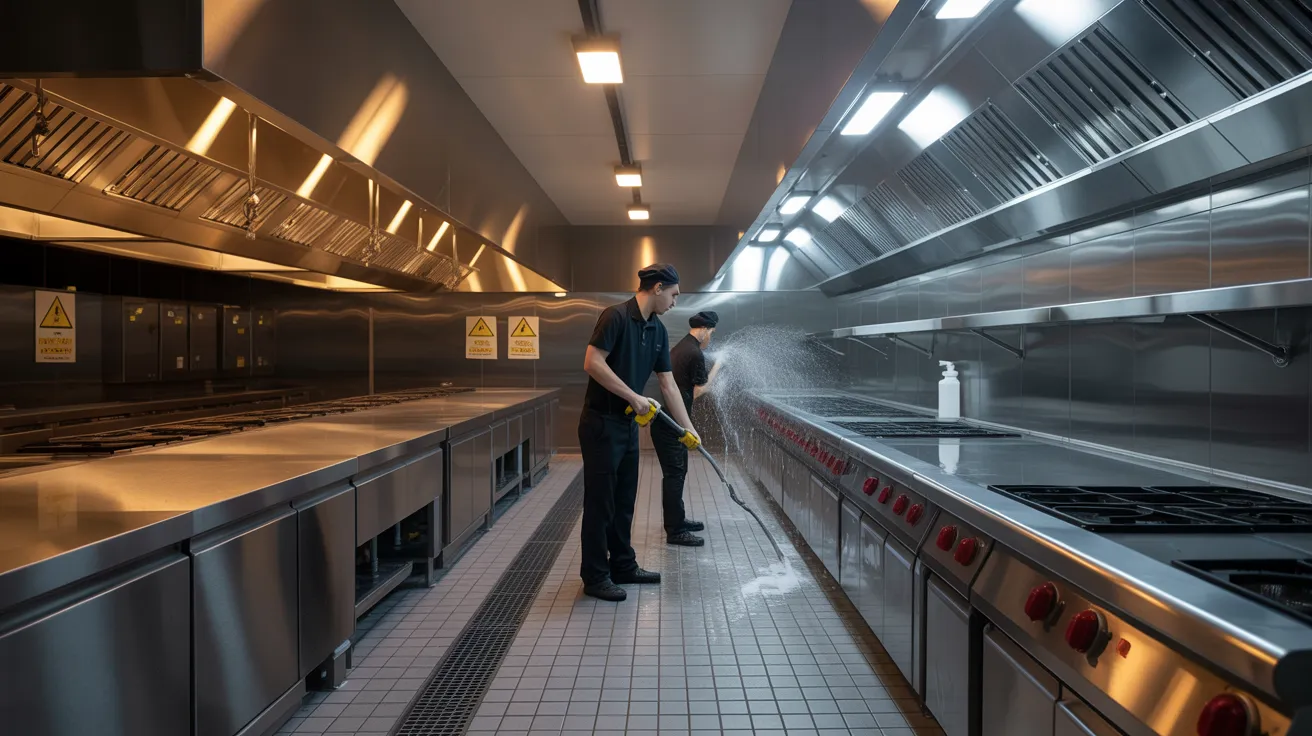
Professional cleaners in Brampton prioritize kitchens, floors, and restrooms given that each location involves specific food safety, slip-and-fall, and public health requirements. In industrial kitchens, you need grease removal from cooking stations, appliance surfaces, drain systems, preparation areas, and backsplashes to reduce contamination and pest pressure.
Documented floor care is also provided as part of the service.
Restroom cleaning requires decontaminating touch areas, bathroom equipment, stall barriers, supply stations, and bins, replacing items and managing smells. They also maintain restaurant cleaning supply rooms where product storage, sink cleanliness, and drain systems impact daily sanitation standards and worker protection.
Why Food Safety Cleaning Matters in Brampton
Brampton businesses need to establish food-safe cleaning standards for meeting health code requirements and passing inspections. You also minimize bacterial spread through proper cleaning of food-preparation surfaces, appliances, and frequently-touched items. Most importantly, you help protect community wellness by reducing the chance of food poisoning in your establishment.
Food Safety Regulations
Because Brampton food operations operate under mandatory safety protocols, food safety cleaning directly impacts your competence to adhere to health code requirements, defend customers, and avoid enforcement action. You must maintain sanitary food-contact surfaces, verifiable cleaning logs, proper chemical use, and verifiable staff procedures that align with municipal and provincial inspection expectations.
Inspectors find details about evaluate your operation to determine that your cleaning program maintains proper stock preservation, machinery hygiene, trash control, and restroom sanitation.
Cross-Contamination Control
Meeting regulatory requirements also depends on your ability to prevent cross-contamination during daily food handling and cleaning. You must separate raw ingredients from ready-to-eat foods, clean work areas after each use, and store chemicals away from food-contact items. Established guidelines minimize contamination chances and ensure ongoing adherence to health checks.
You should implement allergen segregation to prevent major allergens from touching common work areas, storage bins, or tools. Employ separate boards, labeled implements, and careful equipment identification so employees avoid combining products throughout cooking or serving. Require handwashing after handling uncooked proteins, shellfish, egg items, or allergen products. Replace wiping cloths regularly, and verify sanitizer strength with test strips. When you train staff to follow these controls every shift, you create a cleaner, safer operation that satisfies Brampton's safety standards daily.
Community Health Protection
Should food safety cleaning collapse, you don't simply encounter inspection problems—you increase the potential of contamination-related sickness impacting customers, staff, and the wider Brampton population. You also undermine your responsibility in protecting public health, especially in busy food facilities where pathogens travel quickly through surfaces, equipment, and touchpoints.
You must establish cleaning procedures that eliminate soils, disinfect correctly, and verify outcomes. This requires following exposure times, employing authorized sanitizers, documenting procedures, and training employees to satisfy regulatory standards. These mechanisms support pathogen reduction by decreasing microbes before reaching food or hands. Across Brampton, strong cleaning protects at-risk populations, reduces disease potential, and shows your diligence. When you maintain proper protocols, you go beyond requirements—you substantially lower hazards and facilitate secure food handling city-wide.
Why Is Cleaning Essential for Food Safety Compliance?
Implementing thorough cleaning protocols enhances food safety compliance by decreasing contamination threats, preventing pathogen multiplication, and maintaining your facility's adherence to sanitation requirements under HACCP-based programs and public health regulations. You validate that contact surfaces stay visibly clean and microbiologically controlled, enabling documented preventive controls and inspection readiness.
Cleaning efforts additionally fortify allergen control by eliminating residues that can lead to undeclared allergen exposure.
When Ought You Arrange Commercial Cleaning?
You'll achieve the best results from cleaning schedules that account for risk factors, production rates, and compliance obligations rather than a unchanging calendar system alone.
Separate your periodic work from routine cleaning
Finding Quality Brampton Cleaning Experts: A Guide
Screen providers initially by their food hygiene standards—not budget alone. You need to verify that every company meets CFIA, public health, and HACCP-aligned expectations for your operation. Demand proof of insurance, WHMIS compliance, training records, and management systems. Evaluate technician understanding of contamination dangers, chemical safety, and documented sanitation practices.
You must also evaluate operational reliability and oversight. Seek references from food facilities in Brampton, then assess response speed, corrective-action procedures, and communication quality. Ensure the company supports supplier audits and can provide inspection-ready documentation when authorities or third parties demand verification. Verify equipment care, color-coded items are deployed correctly, and site-specific hazards are understood. A qualified provider protects compliance, product safety, and your market standing.
What aspects should a Food Safety Cleaning Plan include?
Put together a written program that clarifies every sanitation duty, standard, and accountability before production begins. You should specify cleaning frequencies, approved chemicals, dilution rates, contact times, tools, and verification methods for each zone, surface, and piece of equipment. Add pre-operational inspections, corrective actions, and employee training requirements.
Your program should also cover cross-contamination controls, waste handling, pest-prevention measures, and documented schedules for restrooms, drains, floors, and food-contact areas. Explain how you'll separate raw and ready-to-eat processes, support ingredient tracking, and ensure accurate allergen labeling through validated cleaning between product changes. You should assign accountability, keep signed records, and review results against regulatory standards, HACCP controls, and customer requirements. When gaps appear, revise procedures immediately and re-educate staff.
Commonly Asked Inquiries
Are cleaning services available for nighttime operations in Brampton properties?
Yes, you can set up cleaning services to handle overnight shifts in Brampton facilities. You'll manage overnight sanitation around operational windows, security controls, and personnel requirements. Providers generally establish nightshift logistics to prevent disruption, copyright compliance, and document finished tasks. You should verify response times, oversight, lockout protocols, and waste management before service starts.
Can Brampton cleaning experts handle emergency spill response?
Yes, you can locate Brampton cleaning professionals providing hazard containment services. They handle hazardous incidents, assess dangers, isolate contamination, and initiate rapid cleanup to reduce risk and prevent business disruption. You should verify response rates, credentials, safety protocols, and waste procedures. If your facility must meet compliance standards, pick a provider that documents events, follows procedures, and supports verification.
Are plant-based disinfectants suitable for food-contact surfaces?
Definitely, green disinfectants operate safely on surfaces contacting food if you source items marked food-safe that adhere to regulatory requirements. You must confirm contact duration, mixing proportions, and rinse requirements ahead of deployment. Plant based formulas minimize chemical burden, but you must have proof of efficacy against harmful bacteria. To keep surfaces residue-free, follow precise manufacturer instructions and ensure your cleaning agent meets food sanitation requirements.
Will maintenance plans accommodate seasonal shifts?
Absolutely, sanitation programs are customizable for seasonal production changes. Revise schedules, staff levels, disinfectants, and confirmation procedures to correspond to seasonal workflows while maintaining regulatory adherence. Reduce equipment downtime through organizing sanitation around production shifts, peak seasons, and usage patterns. Additionally, update procedural documents, staff education, and facility monitoring to capture periodic risks, additional allergens, or elevated soil levels. Continuous reviews maintain the plan current.
Will professional cleaning services train employees on hygiene best practices?
Indeed, commercial cleaning providers typically provide staff training on proper hygiene. Your staff obtains instruction on proper chemical use, contact times, preventing cross-contamination, equipment disassembly, and record-keeping. They typically follow instruction with HACCP, GMP, and CFIA or regional health standards requirements. Many also execute compliance inspections to verify compliance, identify gaps, and reinforce corrective actions. This assists you to establish reliable processes, achieve compliance, and reduce food safety risks each day.
Final Thoughts
Partnering with Brampton commercial cleaning and food safety professionals means more than cleaning—it guarantees your operation meets inspection standards and your standards are defensible. From kitchen areas to production zones, each sanitized surface and organized section lessens contamination risk and prevents major expenses. By arranging service at suitable frequencies and implementing a thorough cleaning program, you protect staff, clients, and your image. In a tightly controlled market, clean environments are non-negotiable—they're critical to business success.